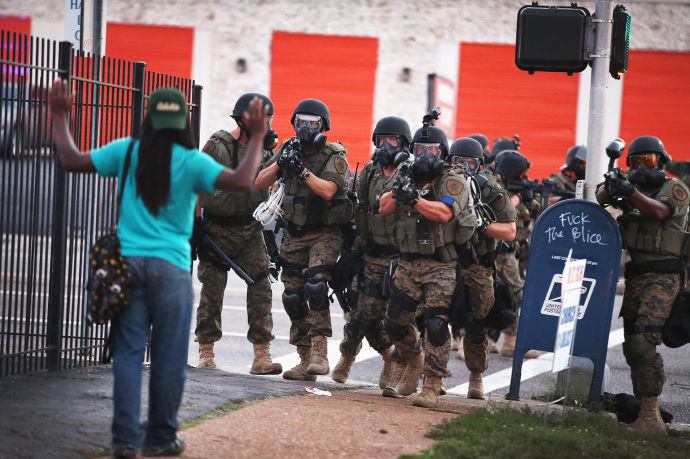
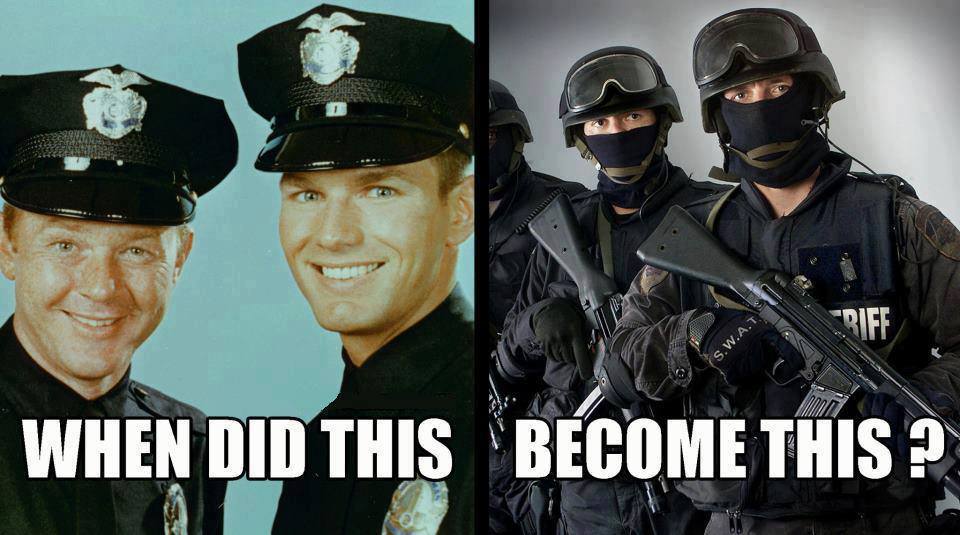
There are too many bad, violent or mentally jacked-up cops roaming around. Worse, expecting the people who hire them to supervise them properly has apparently become too much to ask. So what to do? I have a bold idea.
States should pass laws requiring the termination of any law enforcement employee who through their actions generates civil liability upon the state. Correspondingly, cops should pay for malpractice insurance like lawyers and doctors.
Essentially, a law would need to be passed along the lines of:
Any law enforcement official within the State of Broke who through their actions as a law enforcement official causes a state, county, or municipal agency to be liable upon a judgment in an amount in excess of $15,000.00 (or $X) shall have their employment as a law enforcement official within the state terminated not in good standing (NO PENSION). Judgments or liabilities paid by insurance coverage of individual officers (and not municipal/state general liability insurance) shall not apply to this statute.
Boom….Problem fixed! Zany? Impossible? Allow me to explain how it would work and how it could be done even without your state’s defunct legislature taking action. Fear not, I am not insulting your state: I live in Florida. Your legislature like mine is probably useless. However, almost every state has a mechanism which allows citizens to place laws on the ballot via petition drives…if all those marijuana proposals can get there, so can this.
Surprisingly, these people have accomplished a lot.
Importantly, this does not replace or touch the other ways cops get fired – either because they were charged with a crime or violated police protocols. Rather, this catches the bad cops who are often protected by their own agencies by placing their fate in the hands of the civil courts. Matters in the civil courts are decided by citizen juries seeking to compensate parties if they find the defendant’s or cop’s actions unlawful. They are not designed to fall over backwards to justify police action so superior officers can continue to pretend they are doing a good job.
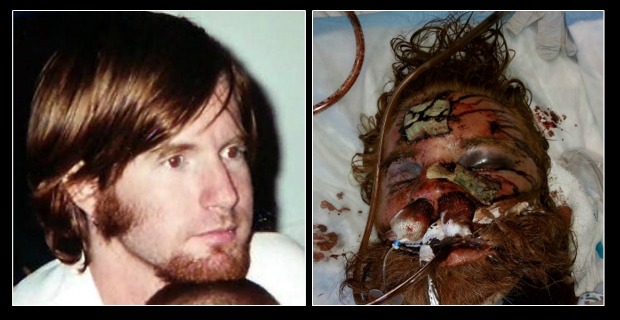
Like this “lawful” use of force. Kelly Thomas before and after.
Those cops who deliver regular beatings or whose antics result in huge wrongful death suits but somehow stay on the job to collect a pension would be gone. No matter how much a department obstructs an internal investigation so it results in a self-serving determination of lawful force, the police have no control over the civil courts.
However, because the burden of proof in civil courts is much lower than the criminal courts, there must be a balance provided. Otherwise, the dragnet would catch the good or rather the not-deserving-to-be-fired cop as well.
Thus, malpractice insurance.
Here they come to save the day!
While insurance would apply for purposes of paying judgments, it is unlikely any police officer would be able to afford the millions in coverage to protect against the egregious behavior which results in too large a judgment…a la Kelly Thomas. (or the judgment which will happen regarding the violently fearful cop who killed that young boy in Cleveland, Tamir Rice)
Hence, any officer found liable in a now-all-too-often wrongful death suit would be terminated subject to the rule even after his policy has paid its coverage limits. Malpractice insurance by the nature of its economics would not prevent a bad cop from being fired in these instances. Rather, it would only partially alleviate the financial burden of the state and taxpayers while the cop still gets fired.
There would however be many instances of lesser damages where insurance would apply and prevent a police officer from being subject to the rule. But he does not get off scot-free.
First, and repeating myself, the rule does not prevent or replace termination of police officers by the standard means already in place. It only supplements the methods as another check and balance against the integrity of the offending officer’s departmental investigation practices.
Second, those officers who behave poorly and generate many complaints or create liability would see their premiums rise rapidly to match the corresponding risk that the insurer will get hit with a big judgment. Many of the repeat offender officers we hear about cause the state to pay 10K here, 25k there and 30K for another instance. These officers would find their premiums so high, they may not be affordable. That is of course if the insurer has not already dropped coverage – meaning any liability in excess of X would result in termination no matter what white-washed decision the department came up with to excuse the behavior.
Third, premiums would be very small for the vast majority of law enforcement officers. Despite everyone’s justified perturbance with the current state of the police, the overwhelming majority of cops are good/normal people. Go meet one under ordinary human circumstances and test the theory out. Most go through their entire careers without generating any significant complaints or ever creating liability. For these officers, premiums would likely be less than a few hundred dollars per year, if even so.
A role model: Elton Simmons
I am reminded of L.A. Sheriff Deputy Elton Simmons, a motorcycle traffic officer. Over the course of 20 years and 25,000 stops, he has never received a single complaint. Instead, he has countless commendations even from people he has ticketed. He is clearly doing many things right. This just and lawful man’s premiums would probably be about $5.00 a month or less. Heck, an officer like him may decide to not even purchase insurance because he appears to know how to operate respectfully, intelligently and by the book day in and day out.
However, as less capable officers generate legitimate complaints or create liability, they will see their premiums rise accordingly….just like car insurance.
The Police Chief may not care that a fresh-out-of-Afghanistan rookie is roughing up everyone unnecessarily and creating complaints from poor people. But the insurer will definitely care and would probably already have in place a system to periodically review all complaints generated by their insureds (the cops). They will look at those complaints to determine a pattern of behavior and readjust their premiums upwards or downward if needed.
By passing the above termination law and allowing insurance, the system would incentivize good behavior and punish bad. It would do so without relying on the integrity (or lack thereof) of supervising officers and internal affairs departments.
“By the book” would no longer be a arrogantly meaningless phrase but rather an all-important method for police to protect themselves from termination under such a system. Any police officer who truly operates “by the book” does not generate liability upon the state. And those cops not so adherent to rules would be strongly encouraged/motivated/incentivized to never stray from that book like these officers did in Mr. Hustle’ video…
(You may have to sign in to YouTube to view)
Many of the actions in that video would have never occurred if those officers actually felt the threat of termination or even the financial strain of paying boatloads in premiums to keep the job. Would you punch someone in the face unlawfully if you knew it was going to cost you and your family an additional $1,000.00 every year over the course your career? Or if it might even result in outright termination because of a civil jury over whom you and your buddies have no influence? It is unlikely anyone would throw that punch unless they truly had the law on their side.
Finally, a huge ancillary benefit to this system is the amount of jobs created within the insurance industry as well as the fact that many victims of unlawful police behavior will receive compensation much quicker than otherwise. Insurers do not always wait for a civil court case to settle a claim although it is common, especially if the claim is large. Often, smaller insurance claims are settled quickly without litigation even if the victims/injured have already retained an attorney.
So there it is in a nutshell. Rather than wait for people in power to act honorably when their own house is in disorder, citizen groups should take action through the ballot box. In my humble opinion, they should seek to add a layer of protection for themselves and state finances by creating a mechanism to terminate the employment of those who create liability while also allowing for malpractice insurance. And more importantly, put a bit of power and influence over the police back into the hands the people. This non-sense has long gotten out of control.
In continuation of our series about international soccer, we present our top 5 most memorable moments in African World Cup history.
FIFA President Sepp Blatter has often reasserted his belief that Africa should be given more qualifying spots at the World Cup. However, there was a time when FIFA and the World Cup was not so inclusive or welcoming for members of the world’s three largest continents. In fact, Asian, African, and North American teams were afforded only fractional qualification requiring inter-continental playoffs prior to 1970. Considering UEFA always had at least eight dedicated qualifying spots, critics rightfully complained of a continental bias within FIFA’s “World” Cup.
As a result of this dispute, African teams boycotted the 1966 World Cup when only one place was afforded for Asia and Africa combined, demanding each continent be afforded at least a direct qualifying spot. When FIFA acquiesced in 1970, Morocco was Africa’s first participant.
However, after two defeats and dead rubber draw against Bulgaria, some argued FIFA should revert to fractional qualification for Africa and Asia (AFC member Israel managed two draws and a defeat). The debate continued throughout the qualification period for the 1974 World Cup, pitting the members of CAF, AFC, and CONCACAF against UEFA and CONEMBOL for qualifying spots at the big event.
And so begins our list.
5. Zaire 1974 – Some memories are so bad they can never be forgotten.
It was under this context Zaire qualified for the 1974 World Cup in West Germany. CAF members were hoping for a good performance to bolster their arguments about qualification spots. Instead, Zaire delivered one of the all-time worst performances by any team in World Cup history. Prior or since. It was a cruel joke against CAF.
After a respectable 2-0 defeat to Scotland, Zairian players learned they would not be paid as agreed by their FA. Dejected by this reality and in semi-protest, they were humiliated 9-0 in their second game by a mediocre Yugoslavia team. It was 6-0 at halftime with the victors seemingly scoring without trying. No one who watched this game felt the Africans deserved to be on the pitch.
In their third game, Zaire faced perennial power Brazil. While Zaire managed to improve their play, Brazil still cruised to a 2-0 lead when, late in the game, Brazil was awarded a free kick outside just outside the Zairian box. As Brazil lined up for the kick, this happened…..
One of the most baffling things ever seen in a soccer match. Was he confused? Does he know the rules? Why is this team playing in the World Cup? ‘Silly Africans’ is what the footballing world thought as Zaire was ridiculed.
However, the truth is much more depressing. Unfortunately, Zairian defender Muepu Ilunga knew exactly what he was doing and made what he felt was the most logical choice in a desperate situation. As you may or may not know, Zaire’s president was a wonderful man named Joseph Mobutu. And by wonderful, I mean a murderous, unhinged, thieving, totalitarian dictator with a penchant for atrocities. After the debacle against Yugoslavia, Mobutu advised his team there would be dire consequences if they lost more than 3-0 to Brazil. And when Mobutu said dire consequences, the players did not need further clarification.
Losing 2-0 in the 78th minutes, Ilunga booted the ball solely to delay the game as much as possible. He and his team were desperate to not run afoul of Mobutu. While Brazil did score on the ensuing free-kick, the game ended 3-0 and Ilunga lived to tell his story. However, Mobutu stopped funding the national side and banned most players from leaving the country to play elsewhere. Many of the Zairian players from this team lived out the rest of the lives forgotten and in poverty, although a few managed to emigrate elsewhere. So yeah, this memory was not so good.
4. Algeria 1982 – Who’s laughing now!…..oh wait, it’s still not us.
While Tunisia managed to snag Africa’s first World Cup group stage win in 1978 with a 3-1 win over a weak Mexican side, African soccer was nevertheless still regarded as weak and inferior. When Algeria qualified for the 1982 World Cup in Spain, the Fennecs were not given much a chance by prognosticators. Their first game would be against reigning European Champions and tournament favorites West Germany. This West German team included legends Paul Breitner and Heinz Rummenigge and was expected to cruise through a group which also included Austria and Chile.
From the comments and predictions before the game, we know the West German players had full confidence they would embarrass their Algerian opponents. West German players openly predicted a 10-0 victory. One was quoted as saying “We will dedicate our seventh goal to our wives, and the eighth to our dogs,” with another boasting he would play the match with a cigar in his mouth. Even the German coach, Jupp Derwall, could not help but join in the orgy of arrogance, stating his team would hop the first train back to Munich if they lost.
Then they played the match. Bolstered by reigning African Footballer of the Year Lakhdar Belloumi and a young future Porto legend named Rabah Madjer, Algeria held off the West German attack and struck first via a Madjer volley in the 54th minute, stunning the Germans and the crowd. West Germany responded with intense pressure, allowing Rumminigge to equalize in the 67th minute. At this point, most rational observers fully expected the German onslaught to continue and the plucky Algerians would eventually cede more goals and lose to the mighty European champions. However, after the kickoff, the next time a West German player touched the ball was when he picked it out of his own net.
Algeria’s response to the West German equalizer proved enough to secure the biggest upset in World Cup history at the time and Africa’s first over a European squad. The footballing world was absolutely dumbfounded. The West Germans were in disbelief and Derwall was made to look a fool when reminded of the local train times.
But the joy quickly turned to anger. Algeria finished the campaign with a loss to Austria and a victory over Chile, looking poised to be the first African team to reach the second round. However, the last match between West Germany and Austria was not scheduled until a day after Algeria’s final match against Chile. Realizing a 1-0 West German victory would send both the West Germans and Austrians through at Algeria’s expense, this is exactly what occurred. After a quick goal by West Germany, the two teams spent the next 80 minutes passing back and forth in one of the most shameful matches ever played in a World Cup. Both FIFA and Algeria were outraged. Fans whistled and waved money in the air to signify their belief the final match was rigged to produce the only result which would benefit Germany and Austria. One disgusted German fan burned his nation’s flag during the second half. Even the German television commentator quipped
“What’s happening here is disgraceful and has nothing to do with football. You can say what you want, but not every end justifies the means.”
Alas, not much could be done and the results stood. The Algerians who surprised the world were eliminated and West Germany eventually went to the final, losing to Italy 3-1. It was not all for naught as FIFA adjusted the tournament starting in 1986 so that the final group stage games were always played simultaneously, preventing another 1982-like debacle from occurring again.
While little solace for the Algerians, there always remains the memory of making the West Germans eat their words and, for a moment, captivating the sporting world.
3. Senegal 2002 – Henri Camara strikes again…
It is hard to properly credit Senegal’s accomplishments at the 2002 FIFA World Cup in Korea/Japan, the only time West Africans have ever qualified for the event. You have to know where it began to understand just how far they went. It is not that Senegal barely qualified for the World Cup, it is that they barely qualified for the last round of African qualifying, which included twenty teams seeking five spots.
To even get to the final round, they barely beat Benin 2-1 on aggregate in a home and away. Many people have never heard of Benin and trust me if you have not, they are not exactly a soccer power. If Benin played the USA in a friendly, USA would probably win 5-0 playing with an experimental squad. Benin would never play a team like Brazil or Argentina because this would be cruel.
Once Senegal managed to squeak past the mighty Beninese, they were placed in a group with reigning AFCON winners Egypt, continental powers Morocco and Algeria, and were picked to finish last with Namibia. After three draws found them about where everyone expected, Senegal went on an unexplainable tear. They won four of their final five, scoring 14 goals in those victories, and edged out Morocco on goal differential on the final match day with a 5-0 drubbing of Namibia.
At the World Cup, the debutants were drawn against France, Denmark, and Uruguay, and were definitely not expected to survive this group. Most assumed they would just be happy to be there. They were wrong.
The first game saw them play their former colonial occupiers in France in the Cup’s opening match. While Zidane was out due to injury, this was a French team with Henri, Trezeguet, Vieira, and essentially all the same players who won the 1998 FIFA World Cup as well as the 2000 UEFA Championship. Again, little respect was given to the African side. French commenters referred to Senegal as the French “B” team since they argued any Senegalese players of worth would be playing with France. Indeed, almost the entirety of the Senegalese team played in Ligue 1 and many carried French citizenship.
However, when the game was played, the French attack was unable to produce a goal despite rattling the woodwork twice. And the French defense found it could not handle the pace and strength of El Hadji Diouf, Henri Camara, and the Lions of Teranga’s attack. A midfield turnover by Djorkaeff provided Senegal the opportunity it needed and Diouf’s ensuing cross was driven home by Papa Bouba Diop, stunning France.
Just like that, the World Cup kicked off with an African debutant beating one of the world’s best teams…again. As remarkable as it was, Senegal was not done. After two draws against Denmark and Uruguay, Senegal qualified for the round 16 where they met Sweden.
Sweden was led by in-form Celtic superstar Henrik Larsson and a young Zlatan Ibrahimavic. After 11 minutes, Larsson headed in a corner to give the favorites the early lead. However, a Henri Camara strike on 37 minutes saw the Senegalese equalize and while both teams created chances going forward, the game went into golden goal extra-time. Near the end a first extra period, a nifty heel pass found Henri Camara streaking through the Swedish defense. Flat-footed, Sweden’s keeper could do nothing but watch the ball ding off the post and into the net to give Senegal its golden goal and golden moment in the land of the rising sun.
As fate would be, it was another golden goal versus Turkey that beat Senegal in the quarterfinals, ending the dream run of the West African first-timers. Although their lackluster play in their final game cost them a chance to be the first African team to reach the semis, Senegal’s run from barely beating minnows like Benin to world’s final eight remains one of Africa’s greatest international soccer memories.
2. Cameroon 1990 – Roger Milla teaches us a new dance
If any African team ever had a chance to hoist the Jules Rimet Trophy, it was Cameroon in 1990. While not expected to go past the first round, the Indomitable Lions would electrify the world.
They were given no favors by the draw, pitted against reigning 1986 World Cup champions Argentina (eventual 1990 runners up), Romania and the Soviet Union. Yet they wasted no time making their presence known, upsetting Maradona and the reigning champions 1-0 in their fist match. Cameroon’s defense proved to be a tough nut to crack for the Argentines and Omam-Biyik soaring header squibbed past Pumpido to give Cameroon the win.
The second game was against co-group leaders Romania and Galatasaray star Gheorghe Hagi, who was supposed to be the star of the match. However by day’s end, the world would become familiar with another name: Roger Milla, an aging Cameroon substitute brought on in the 58th minute. Twenty minutes after coming on, Milla won a loose ball near the Romanian goal, slotted it into the goal and raced to the corner flag to do his now-famous dance. Ten minutes later, a superb Milla strike iced the game and Cameroon qualified for the second round with a game to play.
But Milla was not done. In the second round, Cameroon would face talented Colombia, led by the wonderful and creative passing of Carlos Valderrama. As the game began, Colombia had the run of play before Cameroon settled down. Milla was brought on just after half time and Cameroon began to take control of the match. However, neither team could score in regulation and the first period of the added time also passed without a goal.
As penalties loomed, Roger Milla had seen enough. After receiving a pass, his quick pivot and burst toward goal split the Colombian defense, allowing him to drive the ball over the keeper. Milla’s second goal was less about skill than it was about the poor judgements of Colombia’s gambling keeper Rene Higuita. Known for dribbling and taking risks (such as gratuitous scorpion kicks off the goal line),
Higuita was dispossessed by Milla 40 yards from goal. Milla outran the bumbling Higuita to an easy goal and Cameroon would be the first African team to make the quarterfinals. More importantly, it was clear to the casual observer Cameroon had the talent to challenge anyone.
The quarterfinal match between the Indomitable Lions and England’s Three Lions is a classic which could have been won by either team. After England led 1-0 at halftime, Milla was inserted and Cameroon began to press forward more successfully. In the 61st minute, Milla sprinted into the box and was fouled, earning a penalty which was converted by Cameroon. Less than 5 minutes later, Milla was at it again. A soft touch pass from Milla found Eugene Ekeke streaking past the British defense and his chip gave Cameroon a deserved 2-1 lead.
But England would not wilt. This was one of the best England teams of the last 40 years. With stars like 1986 golden boot winner Gary Lineker and Paul Gascoigne, England were a tournament favorite, having only been ousted from the prior World Cup because of Maradona’s ‘hand of god’ goal and Maradona’s “greatest goal ever scored.” (If you don’t know what I’m talking about, you are not a soccer fan!)
After continuous pressure from England, Gary Lineker earned a penalty and drove it home to equalize. In extra-time, Gazza slotted an exquisite pass through the defense to give Lineker a break away on goal. As Lineker juked the keeper, he was knocked down by a defender and awarded another penalty. Lineker blasted the penalty in the back of the net to give England the hard-fought lead.
Sadly, Cameroon and Milla were out of magic and had no response to Gazza and Lineker’s brilliance. England would go on to win 3-2 after extra time before losing to West Germany on penalties in the semifinal.
As impressive as Cameroon’s accomplishments were, it was Milla’s achievements which are most memorable. The veteran substitute was 38 years old at the start of the tournament, making him one of the oldest participants ever. Always a fixture off the bench for Cameroon, the flashy forward with perfect finishing scored 4 goals and 2 assists during Cameroon’s run and changed the dynamic of every game he entered. In the process, he became a world star and African legend. So much so that when Milla was left off the squad for the 1994 FIFA World Cup (which was expected and reasonable since he was 42 years old), Cameroon’s embattled president forced the coach to include Milla, hoping to obtain some domestic support and distract from other problems the nation faced. Cameroon disappointed in USA 1994 but Milla did score one goal, becoming the oldest goal scorer, and participant, in World Cup history. Largely based on his efforts on Italia 1990, Roger Milla was named by CAF as the best African footballer of the last century and deservedly so.
1. Ghana 2010 – Luis Suarez is the Grinch that stole an entire continent’s Christmas
The 2010 FIFA World Cup was a big deal not just for South Africans but for all Africans. Never before had the continent hosted an Olympics or FIFA World Cup. The anticipation was palpable through the qualification campaign as every nation desperately wanted to qualify for a tournament which would be played so close to home. Heck, Egypt and Algeria almost broke off diplomatic relations over a qualification spot. As highly anticipated as the tournament was for the world, the hopes for African entrants was even higher.
Unfortunately, 5 of 6 African teams disappointed and failed to qualify for the second round, leaving only Ghana to carry the continent’s banner. And Ghana was well suited to carry those hopes. Playing in their third consecutive World Cup, Ghana had proven themselves worthy competitors on the global stage and consistently among the best in Africa. While they are nicknamed the “Black Stars”, the moniker “Brazil D’Afrique” has also arisen in the last few years as a compliment to their talents and consistency.
After a second place finish in the group stage behind Germany, Ghana faced familiar foes USA in the second round. While USA had just come off a thrilling victory over Algeria and played with great passion, the Ghanians proved to be too strong in the end. Asamoah Gyan muscled off an American defender and struck home a powerful volley in extra time to make Ghana the third African team to take its chances in the quarterfinals.
You may have noticed the quarterfinals have been kind of a glass ceiling for African squads. While Asian teams have managed to reach the semifinal, no African squad has ever done so. Cameroon in 1990 may have been the best African team to go the World Cup, but Ghana 2010 had the best chance to shatter this ceiling.
In the quarterfinals, Ghana met resurgent Uruguay. While Uruguay had not achieved much World Cup success over the previous decades, their performance in South Africa 2010 is worthy of its own article. Diego Forlan, Luis Suarez, and Edison Cavani were the most efficient attack at the tournament and made Uruguay a threat to beat any team.
After ending 1-1 at full time, the game proceeded to extra-time. Towards the end of the second period, Ghana began applying more and more pressure on the Uruguayan goal. Seconds away from penalties, Ghana was awarded a free kick in the Uruguayan zone. Now if you have spent the time to read this article, you probably know what happened. If you do not, here is the recap.
As tense as you can imagine….the ball bounces around, gets smashed at goal, gets saved by a defender off the goal line, bounces around again, get smashed at goal again and is saved by Luis Suarez pretending he is the goalie. (and if you noticed, the other Uruguayan defender also tries to save it with his hands but he was not as effective as Suarez). Suarez was deservedly red-carded and Ghana awarded a penalty. But instead converting the penalty and creating a continent-wide party, Gyan smashed his penalty off the cross bar and game proceeded to a penalty round. Almost as if all of this was a scripted tragedy, Ghana would lose in remarkable fashion.
Devastating. The roller coaster of emotions which is African football can be best portrayed in those zany few minutes at the end of this game. Ghana played a great game and performed excellently at the World Cup. They had their opponent on their heels and victory seemed inevitable, both when the scramble was occurring and before the penalty. It seemed certain African soccer would finally break through to the semifinals and would get to do it on home soil.
And be certain, this was poised to be a great victory for all of Africa, not just Ghana. Politically and economically, the vague and amorphous concept called African unity has not faired so well. But when it comes to sport, I have never met an African who does not root for all African teams against any others. It is a beautiful thing on the sporting level. A sense of us against the rest. And Ghana was our “us”.
Luis Suarez was vilified wrongly as a cheater or a disgrace by many in the sports media and will forever be remembered as the single man who shattered the dreams of so many. This is understandable considering the emotion and magnitude of the moment but is nevertheless misplaced.
As time has passed, more have come to understand the brilliance of Suarez’ quick decision and the grudge will eventually fade. He was placed with only two choices and a nanosecond to decide: 1) let the ball go in and be eliminated; or 2) stop the ball at all costs, be red carded, concede a penalty, but give your team a tiny chance. Any rational thinker would do what Suarez did if they were quick enough to do so.
Uruguay turned Suarez’ tiny chance into a historic victory and at the same time, provided Africa with its most heart-breaking, yet also most memorable, moment in World Cup history.
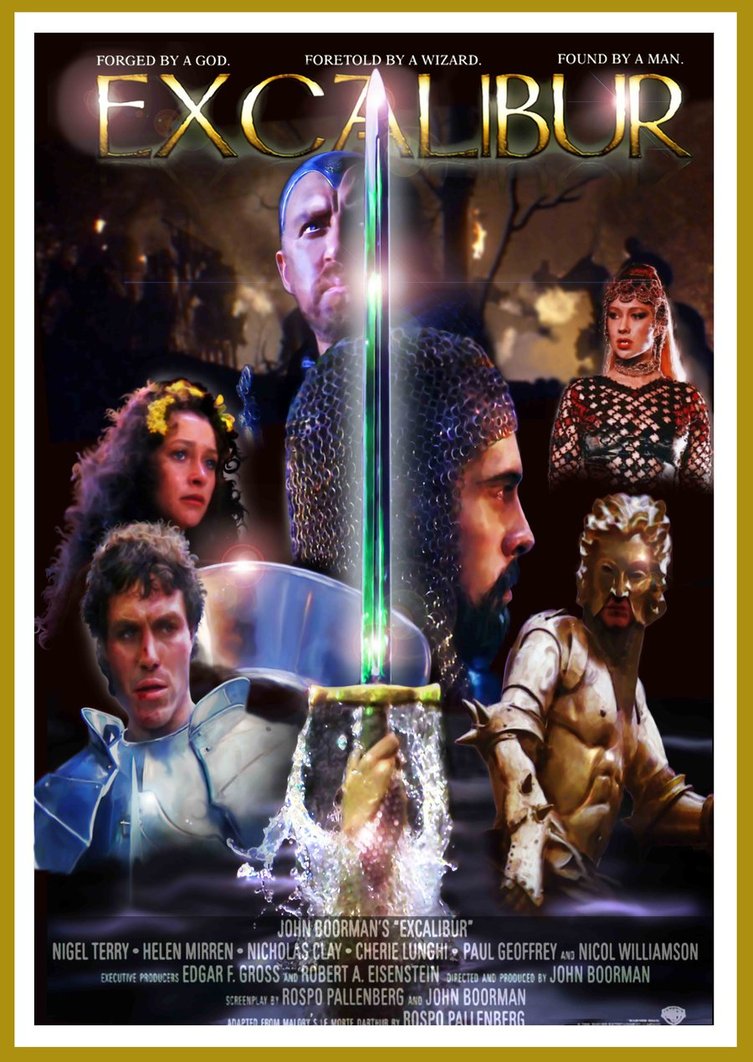
A few observations and theories on two characters cast in a negative light throughout John Boorman’s masterpiece: Morgana and Guinevere. The movie like most of literature portrays women as the root of the problem. Or does it say something else about these two?
Concepts of duality and equality abound within the movie. Particularly the duality of man also characterized as ‘the battle within oneself.’ This is best exemplified by the character Lancelot who struggles internally throughout and later dies of a self-inflicted wound. However this central theme overlays into the other characters as well. Essentially and being overly simple we must beware that good begets evil and evil begets good. They cannot be separated. Further, within this dual concept things are often paired and not individual.
So who are the women and what do they represent? We know Morgana is paired with Merlin and Guinevere is wife to Arthur. But what they represent or what is their true role within the story is trickier to discern.
First Morgana: Hell hath no fury like a woman scorned.
Just as I wondered who is the real hero and decided it was Perceval (Part I), I wonder who is the real villain? Is there a real villain? I am not so sure.
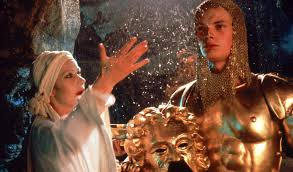
Morgana as counter wizard to Merlin and mother to Mordred appears as the main villain for most of the movie. She is certainly portrayed as one evil woman.
But step into her shoes. Or rather the shoes of eight-year old Morgana. From her perspective, her father Cornwall was an equal combatant to Uther. So much so that even after Uther wielded Excalibur, Cornwall was still given “all the land from here to the sea”, which apparently was sizable since Cornwall was happy. Then Merlin and Uther conspire to kill her father, have Uther rape her mother and have Merlin steal her baby brother. No child or her parents deserve this fate.
Murderous conspirator.
To her, quite reasonably and truthfully, Merlin ruined her life. More so, had Merlin given Excalibur to Cornwall (who is not portrayed as big of a jerk as Uther), her father would be King and she would be in line to be Queen. Yet the treacherous Merlin arbitrarily gave an ordained magic tool to her father’s opponent in what was otherwise an equal fight.
There is no possible way anyone, even Mother Theresa, could forgive and forget this.
Also, Morgana is incredibly intelligent and observant. She knew during the rape of her mother that Uther was not Cornwall, meaning she could intuitively see through the silly illusions of Merlin’s magic as a child.
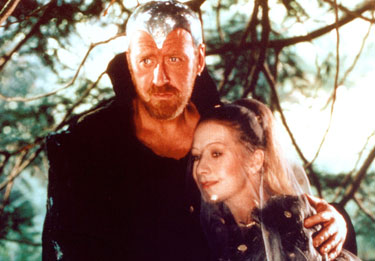
She then created an ambitious plan to take Merlin’s powers the same way Merlin stole her happy future: through deceit. Morgana did not create herself. Like Eve from the rib of Adam, Merlin begat Morgana. She is the equal and dual reflection of Merlin the manipulator.
Similar to Merlin, Morgana never aspires to be Queen or ruler but rather to control who becomes the king. Like Merlin ordaining Excalibur to Uther and then grooming Arthur, Morgana ordains Mordred to be invincible to mortal weapons and grooms him. She like Merlin uses magic to serve the self-interests of her favored people with no regard of the negative consequences or collateral damage done to others. And of course, Merlin and Morgana are the cause of each other’s ultimate demises.
She and Merlin are two sides of the same coin, bound together forever. But while Merlin is the one who dragged her on to the coin, she bears the burden of being deemed evil while also being the first one evilly wronged. One side portrayed white. The other black. But in reality equal and the same. This is the essence of her speech to Merlin as she eternally traps him in ice.
Further, her duping of Arthur to begat an heir is a smart attempt to set right the wrongs of others. Incest was common among crazy royals as pure bloodlines mattered to support legitimate claims to the throne. By sleeping with Arthur,she tied the two families (Cornwall and Uther) together into a single heir. Mordred is the only grandchild of both the original combatants for the throne with only one grandmother.
To Morgana, Mordred’s ascension to the throne would have as best as possible nullified the crimes done by Merlin and Uther. Remember Morgana’s answer to Mordred when he asks if she has any message for her ‘dear brother’ Arthur? She responds: “You are my message.” Perfect. Morgana may have been the only character thinking clearly in the entire movie. Yet like Medusa we are supposed to hate her. Left with no justice, Morgana got shafted.
Now Guinevere: Guinevere does not have much screen time in the movie so there is little material to interpret. Most symbolism in her character lies in the love triangle and betrayal.
We cannot blame her for sleeping with Lancelot. It was Arthur who betrayed her love and their marriage by refusing to defend Guinevere’s honor against Gawain’s untrue accusation. Arthur’s self-righteous arrogance resulted in Lancelot doing a sacred job which must be reserved for a husband. How could Arthur not stand up for his wife and expect her not to give her love to the man who is willing and almost does die for her? Especially when the man is way more talented and cooler than Arthur. Just as Morgana is intelligent, Arthur is an idiot.
His stubborn refusal to honor his wife is the largest error of judgment in the film. It also resulted in Perceval becoming a Knight, Lancelot wounding himself and Merlin using magic to let Lancelot’s love of Guinevere keep him alive despite the wound. Going forward, remember that Arthur’s placement of his laws over her love was the catalyst for the “Things Fall Apart” portion of the movie.
Lancelot doing Arthur’s job.
Back to Guinevere.
Regardless of the essays which could be written about each character or the love triangle, Guinevere is God. And probably more so than Arthur or any other character. Crazy but hear me out.
We are told Arthur is the Lord. Or the representation of a God on Earth. Jesus-like. When Perceval takes the Grail, they come out and say so. This always bothered me since Arthur is an overly fallible fool. Surely God can do better.
Now, the movie is named after a very special sword. As delineated above, the fate of all characters was determined by who got to hold Excalibur and only a few did.
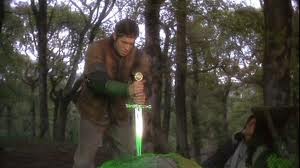
But importantly, how did they get it? Famously, Arthur gets the sword by pulling it from the stone many years after Uther thrust it there.
Excluding the stone, the sword is bestowed twice from a supernatural or magical character: The Lady of the Lake first to Merlin and then to Arthur. These are the only two occasions the sword is “given” or ordained in the movie.
There are also only three instances where the sword is handed from Arthur to another. First to Kay after Arthur pulls the sword and to which Kay quickly returns Excalibur. Then Arthur to Uryens to knight and crown Arthur and later to Perceval to return it to the lake. It should be noted when Kay, Uryens and Perceval are first handed Excalibur, they all have other thoughts about its potential use. Yet as if compelled, they are all quickly faithful to the will of sword’s rightful master, Arthur. Clearly, this is a unique sword for which mere mortals are not capable or permitted to wield.
Regarding the stone, no one was able to pull the sword from that infernal rock. No matter how hard they tried for years, the strongest men around could not budge Excalibur one millimeter. This is an important lesson we already knew: when an authorized user sticks Excalibur into stone, it can only be pulled out by another authorized user. Not even Merlin or Morgana could pull the sword from the stone. Only a deity, semi-deity or a representation of God on Earth like King Arthur.
And Guinevere of course. Didn’t anyone notice?
Growing up, my favorite scene in this movie was what I happily referred to as “Naked Guinevere!”
One sexy goddess.
As we all know, her and Lancelot get it on before Arthur shows up and finds them sleeping. Arthur then abandons Excalibur by sticking it between them, Lancelot runs away and Guinevere cries around the sword. Then everything falls apart until Perceval saves everyone and Guinevere returns Excalibur to Arthur.
Wait! She did what!?!
As a naive youth, what bothered me most about the sexy betrayal scene was the choice of location. Lancelot had been to this place before and it was apparent in both scenes it is full of jagged rock and stone covered in moss. No comfortable areas. Why not do it on the soft grass just over yonder? Is it a simple and obvious ‘love on the rocks’ metaphor? This seems unnecessary under the circumstances.
This is not a bed of roses.
When Arthur abandons Excalibur, the ground shakes and Merlin agonizingly screams “into the spine of the Dragon!” This was not a normal event – the dragon did not mind too much even when Uther lost Excalibur. We can be certain Arthur did not put Excalibur into dirt or clay or sand. He definitely put it into stone. As explained, only very special people can pull this thing out of a rock. Basically, only Arthur (God) and not Merlin, Morgana or any other characters.
Yet without any explanation, we learn at the end that diminutive and weak-armed Guinevere yanked it out without a problem. And unlike Kay, Uryens or Perceval, she did whatever she wanted with it with no regard of the wishes of Arthur, who later wondered of its location. In her case, she wrapped it up for twenty years as if it was a minor trinket or memento to store away while most of the characters died.
Guinevere is an authorized user of Excalibur. She is not merely Arthur’s wife. She is no less than a God.
Perhaps the one true God.
I stated Excalibur is bestowed or “given” throughout the movie at crucial points only by the Lady of the Lake, a symbol of Paganism. Well, not exactly. When Arthur abandoned Excalibur, for all intents and purposes, it was forever lost as no one knew where it was.
After Perceval found the Grail, Arthur rode out to fight Mordred without Excalibur yet Mordred was invincible to mortal weapons. Without his sword, Arthur and his army would assuredly lose. Excalibur had to be “given” one more time.
Another theme throughout the movie is the change from Paganism to Catholicism. In the beginning, Excalibur is bestowed by a Pagan God. However, the final time Excalibur is bestowed to Arthur, it is by a representation of the Catholic God, thus continuing the transition of religions.
Where has Guinevere been all these years? A Catholic church: the House of God. When Arthur enters the room to see his wife after twenty years, she is standing in almost the same position and under a similar cross as was the “Lord Arthur” during Perceval’s Holy Grail scene. Yet humbly with no flair or bright lights and music.
Notice that Guinevere only reveals she kept Excalibur after Arthur apologizes for his dumb actions throughout the movie. His final confession. Without which she apparently would have let him ride to defeat. So with triumphal music sneaking in, Excalibur wrapped in pure white cloth is “given” to Arthur by a symbol of God: Arthur’s better half and wife, Guinevere.
More so, Arthur’s “It is a dream I have” speech and final loving words to his wife read perfectly as his prayer that Guinevere will accept him into Her eternal Kingdom of Heaven.
(Video starts after apology/confession)
We have written of the symbolism of Arthur’s death and Perceval’s survival in the other post. Essentially, God is gone and has left us in charge. It is quite a declaration yet fitting end for a movie like this. However, is Arthur the true God? He made enough errors of judgment to certainly doubt his divinity and he departs along with Excalibur, the last symbol of the ancient Pagan Gods.
No one kills Guinevere. No one is looking for her and no one is her enemy in the movie. Looking back, it was the failure to honor Her that caused the downfall of every character but we have no reason to believe she has been or ever shall be in any danger. In the end, all the nobles and magical characters are gone except only her and Perceval, common man.
Finally, we can be assured that noble Perceval, the worthy peasant who rose to Knighthood by bravely defending Guinevere’s honor and whose perseverance of faith was rewarded with the Holy Grail, will forever dutifully serve his Queen. Even if never comprehending Her true power over his world.
While common man thinks he is alone, God hides in plain sight. At the most obvious of locations but in a form he least expects. Yet as if masterfully manipulated, the one particular form he has always honored and loved. The one form he shall never fail to defend.
Behold the Almighty. Nice halo too.
END
___________________
You bent my mind, Boorman!
Now, I’m gonna have to read “Le Morte D’Arthur” to get all of this out of my head once and for all.
Oh, to have lived as one of those brave warriors.
A fantastic legend from a mythical past.
Daring deadly dragons and deadlier women.
It is a dream I have.
I love the movie Excalibur. A squire pulling the sword from the stone. The tale of Lancelot. The quest for the Holy Grail and the final embrace of father and son. And never forget the epic and triumphal music. This movie is my knowledge of King Arthur’s tale. John Boorman’s version of this myth will forever suffice for this non-Brit.
The more I watched this polyphonic film, the more I questioned who is the real hero. Eventually, I decided this movie is less about Arthur or Merlin or Lancelot or anything they represent and more about someone else.
The story of Excalibur is a better tale about Perceval. One of the Knights of the Round Table, many people do not remember his name.
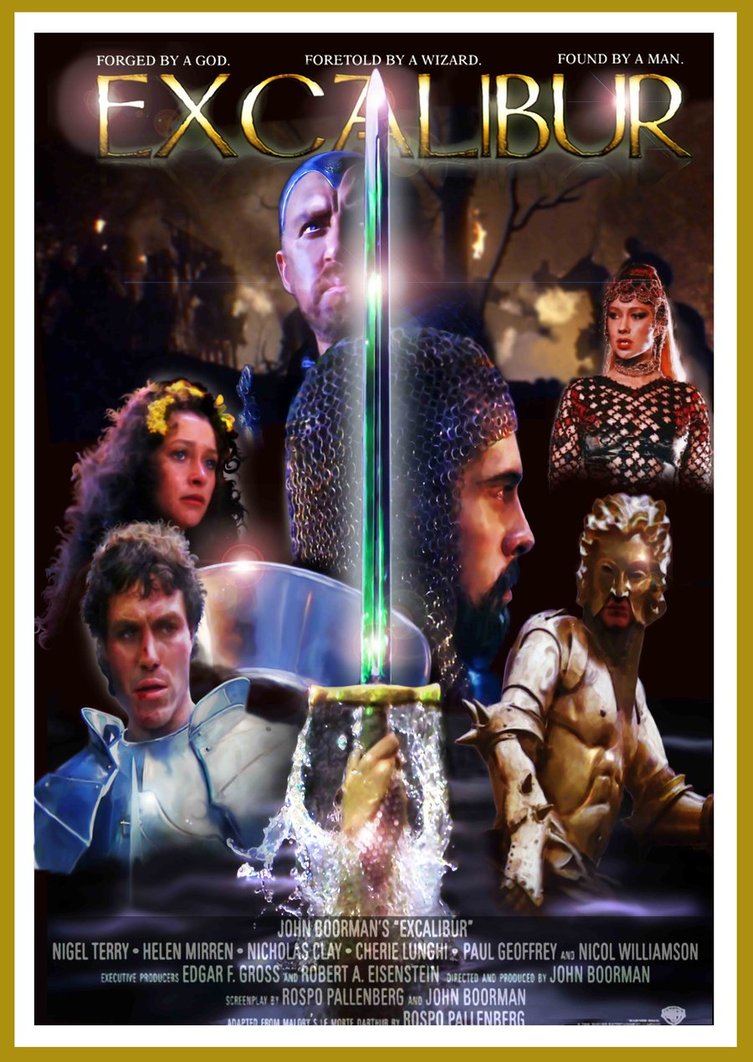
Perceval is not on any posters.
The more you think about it the more you realize he is the only character worth a damn in the whole film. And he is not introduced until the middle.
I break this movie into six acts:
Act I: Backstory with Uther and Merlin and Arthur’s birth
Act II: Arthurs wields Excalibur and becomes King, saving LeondeGrance.
Act III: Introduction of Lancelot and Marriage to Guinevere
Act IV: Betrayal and Things Fall Apart
Act V: Quest for the Holy Grail
Act VI: Redemption and Final Battle, Conclusion.
Only Merlin, Arthur and Morgana span all acts in some form.
On first glance, you would probably list the main characters as: Arthur, Merlin, Lancelot, Morgana, Guinevere, Mordred and Uther before going further.
Let us examine these main characters, dispensing first of the two main villains:
Morgana: Wronged in childhood, Merlin and Uther killed her father and it made her evil. Nothing else need be said. (Except here)
Modred: Incestuous, power hungry, murderous, heathen offspring of Morgana and Arthur. Demon child. Pure evil.
And the potential protagonists:
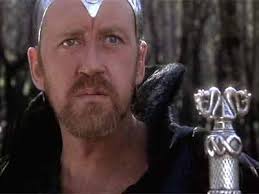
Uther: Undeniably a dirtbag. Merlin basically hands him the thrown by giving him Excalibur and has to teach him how to make peace with Cornwall. A peace which lasts for less than a day. Minutes after making a blood oath, Uther lusts after Cornwall’s wife. He then gets Merlin to cast some magic to lure Cornwall out of his castle and kill him while he rapes the lady in front of her daughter Morgana. Wonderful guy this King is. He got what he deserved. Thrusting the sword in the stone is a cool way to go out though.
Guinevere: Has essentially one job in the whole movie: DO NOT SLEEP WITH LANCELOT! Sleeps with Lancelot and things fall apart. Her redemption is she held on to Excalibur for Arthur. (And so much more)
Don’t do it!!!
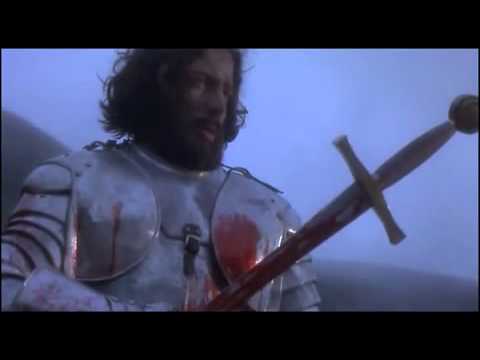
Lancelot: The perfect knight with the perfect flaw. Worships Arthur even though he knows Arthur cheated to win their duel. Then becomes useless as he will not come to Camelot since he can not stop lusting over his best friend’s wife. After he sleeps with Guinevere, he goes AWOL for twenty years while things fall apart and then tries to kill Perceval because Perceval has the audacity to come near him. Only comes back at the very end when all the characters are redeemed of the crap they pulled during the movie. It should be noted no one actually kills Lancelot. He appropriately dies from a self-inflicted wound.
Merlin: Unquantifiable idiot whose conceited manipulations spawned the whole fiasco. He gives Excalibur to the arrogant tyrant Uther. He helps Uther rape Cornwall’s wife, getting Cornwall killed in the process and all the while bartering a child with the rapist. Mind you it was Merlin who convinced Uther to make peace with Cornwall in the first place. Duplicitous. He does not ever seem to worry Morgana may want revenge for killing her father even though he confessed his role to Morgana’s mother when he took baby Arthur. Instead, he is deceived like a giant doofus because Morgana shakes her behind at him, getting forever locked in an ice tomb after giving up all his secrets. Like everyone, gets redeemed at the end. This movie could legitimately be retitled “Merlin is a Moron”
The foreseeing Wizard did not foresee a problem with this.
Arthur: Incompetent squire. Goes from humble king to arrogant king in minutes breaking Excalibur in a fight with Lancelot. Does not notice his best friend ogling his wife at every chance and vice versa. Lets people talk crap about his wife and does nothing before she even sleeps with Lancelot. She then sleeps with Lancelot and he still does nothing except give up Excalibur and be pathetically depressed. Gets easily duped into sleeping with Morgana, hell-spawning Modred. Lets the land fall into disrepair and becomes a genuinely worthless sack of potatoes for twenty years while Morgana and Mordred rampage about. Is always reliant on Merlin for advice and Excalibur for fighting. Sends all the knights on a pompous quest to find the grail for his own purposes, causing the brutal death of every knight but one. After the battle saving LeondeGrance, everything about Arthur reeks of failure and arragance. Until of course he is handed the Holy Grail while decrepitly laying on his throne. He then redeems himself and gets a totally underserved king of kings sendoff.
There is not one worthy hero in this entire lot. Just flawed people who create problems.
So who is the best hero in this movie of heroes?
Perceval. He of perseverance.
This guy.
It is clear. Some clues should be (w)holy obvious but we will go in order of the movie.
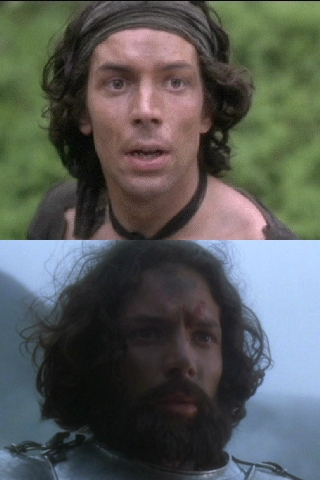
First, Perceval is the only character who could plausibly represent the viewer or common man. Every character from the onset is either ordained nobility, mysterious Lancelot, a more mysterious lady in a lake, a villain (also ordained nobility) or Merlin. There are no common man characters in the entire film except him. Perceval was not a knight or empowered by lakes or magic. He was a young peasant scrub when Lancelot came upon him. He convinced Lancelot to take him as a squire by showing skill in the forest, successfully shadowing an otherwise fearsome knight for a time and even hunting and cooking while the great Lancelot slept. This is called earning a job through merit and ambition. He then ran all the way to Camelot rather than ride piggy back. This is impressive determination to prove worth to an employer. Who would not hire such a man?
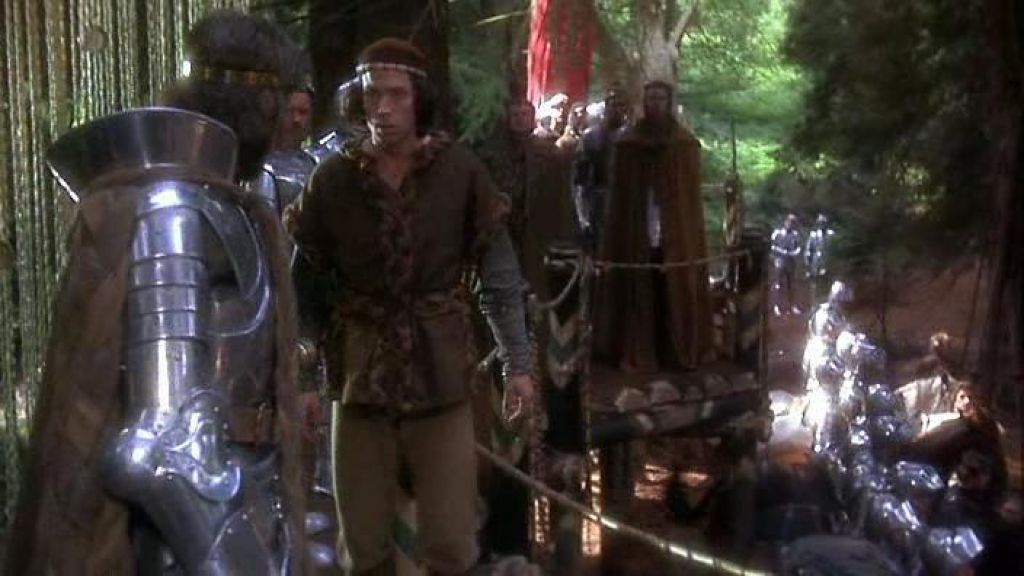
Knighting of Perceval
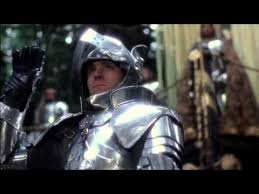
Second, he earns knighthood through courage, valor and adherence to duty in the face of death. When Gawain challenged the Queen’s honor before her affair with Lancelot, not one of Arthur’s supposedly loyal or brave knights would rise to his challenge and Lancelot was nowhere to be found. Lowly Perceval did not know what was going on or, frankly, give a hoot. He only knew his King was asking for someone to defend his Queen’s honor. Not to know why but to do or die. Arthur did not know Perceval’s name when he knighted him. It was irrelevant because his qualities already showed. This man leapt on a horse with no armor ready to brazenly charge at what appeared to be certain death against a heavily armored and studly-young Liam Niesson. And more so, Perceval looked on it as if he had won an award. A squire bravely fulfilling a knight’s duty is how a squire becomes a knight. Of course, Lancelot finally showed up to take care of his own mess, sparing Perceval a needless and unjust death. Or sparing Gawain perhaps.
Third and most obvious is Perceval succeeds in the Quest for The Holy Grail and is the only character worthy of speaking with God. Twice actually since he failed on his first attempt to answer the Almighty questions and therefore had to continue the quest.
Act V is the story of the persecution and perseverance of Perceval. The Knights of the Round Table all starve, freeze or are slain in battles but Perceval carries on. They fall to the hallucinogenic temptations of Morgana but Perceval somehow resists. He does however receive good fortune when the boot spur of a dead friend cuts his noose. A little help from heavenly above for the one character who deserves to receive such timely and divine assistance.
God’s scene is not too important. It is straightforward with God asking Perceval about the purpose of life and the Grail and our hero responding “to serve Arthur/The Lord.” Do no begrudge anyone for this. It is difficult to write God well so it is best to leave it as a simple statement about Perceval understanding the meaning of his life (to serve his Lord Arthur) and move along to the rest of movie.
The preceding scene carries more meaning. After seeing Uryens killed and totally hopeless knowing he is the last knight, Perceval comes upon a desolate valley with lowly people around a river. There, he sees old, filthy and haggard Lancelot along with a group of poor souls mourning in a funeral procession. Seeing his former boss and assumed greatest of knights, Perceval begs Lancelot to return to help save Arthur. Perceval thinks they need the awesome abilities of Lancelot to find the Grail. Perceval pleads with Lancelot to keep faith in Arthur and Lancelot promptly tells the people to throw Perceval into the river to drown.
Great juxtaposition, Lancelot represents the best mortal men believed could be attained. As Gawain said, “is there anyone here who doesn’t think him a God?” If anyone thought he was more than a God, it would have been Perceval, his former squire. For Perceval especially, Lancelot would represent the limit of human ability and courage. If Lancelot could not do it, then it could not be done.
And for his dedication to the Round Table and after twenty years of honoring a knightly quest Lancelot has ignored, Perceval is rewarded with a horrible death by the Round Table’s greatest knight, Lancelot himself. Further, since he is the last knight, Perceval knows Evil will win upon his death. But no matter the circumstance or how hopelessly dejected Perceval appears, this man never quits.
Drowning and weighted down by the knightly armor whose worth he thought paramount, Perceval sheds this burden by dumping it on the river bed where it belongs. Practically naked but free, Perceval finally rises ready to meet God. Not as a self-rigteous Knight of the Round Table but the mere and worthy man he has always been. This time, after his long persecution and continued perseverance and with clairvoyance of purpose, he nails without hesitation the Almighty’s questions on the first try. He takes the grail and still half-naked goes straight to pathetic Arthur, restoring the King’s clairvoyance of purpose and setting in motion the final battle which redeems the other characters.
The Final Embrace
Fortunately, Perceval is properly rewarded in the final scenes after an awesome battle. The good guys sacrifice to extinguish evils they themselves created throughout the film, dying brave deaths. No one is left after this brutal slaughter of two armies. No one except somehow Perceval. Of course, how fitting and deserved. The one survivor is our common man. The only man worthy of meeting God twice and living to tell the tale. Perceval’s whole story is akin to the ‘meek who shall inherit the Earth’. Well done, Boorman!
As much meaning as there is in the rise-to-God scene and Perceval’s ultimate survival, there is also much in the sparse dialogue between dying Arthur and Perceval. King Arthur tells Perceval to throw Excalibur into the lake and Perceval tries but thinks against it. He pleads with Arthur that “other men” may need to wield the mighty sword to fight future evils. Arthur tells him when the need comes the sword will again return and commands him to toss it into the lake. Arthur is telling Perceval or rather common man that he does not need help to rule this realm, though Perceval struggles to realize this and still doubts his future despite surviving everything he has already been through.
Keep it!
Now this is the great Excalibur for which everyone battled throughout the movie, forged at the dawn of time or whatever Merlin said. Very few people would have given it up. Not you, probably. Certainly not me. But unlike most, Perceval is truly noble. He takes the greatest weapon ever known and heaves it into the lake to be never seen again. Perceval, the peasant scrub casually introduced in the middle and who at end is the highest and mightiest man in all the land, will be fine without ordained tools or the ordained themselves. Even if he fears what may come, this man will persevere.
As credits roll, King Arthur and all of his fantastical brethren have been rightfully cast off. Their show is done. Only he remains and it could only have been him. Invictus Perceval. Brave and righteous. The (not-so) hidden hero of John Boorman’s Excalibur.
It has come to my attention a couple of times now that some people really do not like this post. I understand these sentiments. Just click away now…..I am serious.
Have a great day!
–
–
–
Stubborn, eh? Well, if you insist, make sure you read the opening line and first paragraph twice after you are done. And to be honest, do not get too upset about what one blowhard on the internet says about a tattoo he has never seen. Screw that guy! is what I would think, personally. Nevertheless, I did my best to prevent myself from gratuitously making you angry while you most likely procrastinate from work. Govern yourselves accordingly.]]]
So begins a mean and hypocritically judgmental post…
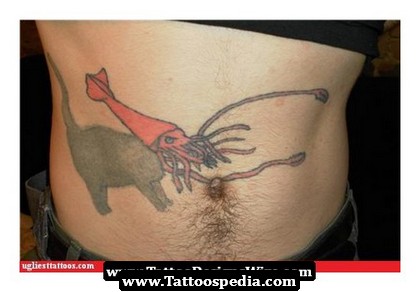
As we look around there are fewer and fewer individuals and more and more drones wishing they were clones. One indicator is the presence of a tattoo. Not all tattoos but most nowadays. And further the tattoo is not conclusory but only evidence.
Some tattoos are totally appropriate. Religious or cultural marks of expression are common and we can not begrudge Samoans and the like. We also understand if you have joined a high-risk team, close-knit unit or profession such as the military or other emergency personnel. If you find yourself in a situation where you rely on the talents and skills of others to stay alive, go ahead and proudly get a tattoo if it will make everyone happy and add to team cohesion.
Acceptable for purposes of staying alive.
We will not address all the deceased and departed tattoos or portraits of children and wives. While we go the photo-in-wallet route, people grieve and love in different ways even though these remembrance tattoos never seem to do the person justice. Usually, they are hideous.
But other than these limited situations, we do not see the point anymore. There was a time when those who had tattoos were rebels of society. Looked down upon and feared by the average sap in public even if the fear was unfounded. Sporting a tattoo back then meant not caring about society’s rules and stating you shall do things your own way. These were the tattoos worth having.
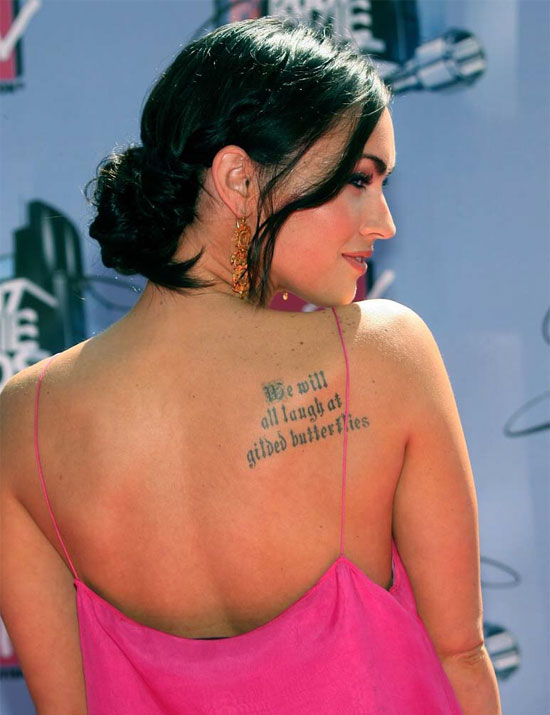
Not anymore. Tramp stamps, inspirational quotes, meaningless Chinese characters and artistic portraits are the norm. Who are these people?
Heck, we don’t know what interests we’ll have next year and are baffled why people think there can be a single image or message they would want to look at in a mirror for the rest of their lives. Even worse, an image or message they feel encapsulates them so perfectly that it has been sacredly chosen to be their slogan or mantra to the outside world forever. This is near-sighted narcissistic nonsense.
We laugh harder at you.
We once had a list of quotes and there were several great ones. For instance, one of our favorites is “ye shall know the truth and it shall make you free”. Damn good quote. Yet despite its awesomeness, we are pretty sure we’d be sick of looking at it on day three. Our friends would tire of seeing it faster. Same goes for any artwork. Even the Mona Lisa and especially the Mike Tyson-esque tiger stripes people are putting all over their body.
Another are Chinese characters. Whereas you can at least decipher the meaning of some lame quote or interpret a photo, we are certain there is a large percentage of people with characters on their back which are either drivel or an insult like “I am a ding-dong”. And deservedly so.
Chinese Meaning: unknown English Meaning: Idiot
These god-awful tattoos of every variety are on everyone everywhere now. I see tattoos on the ankles of lawyers and lower backs of teachers. Where we live, we have reached the point that when we meet someone our age, we expect a tattoo and are genuinely surprised if they do not have one. For nitwitted millennials and those a little older, getting a stupid tattoo has become some kind of right of passage. Almost like driving a car or voting.
Worse, most of these people know it is a bad idea because they always tell you “I can get it removed later”. If already in your head, perhaps the tattoo is not a good idea in the first place. That it can be removed later is awful, naive and glib thinking. Why undertake totally fruitless actions which can only be reversed by spending a lot of money and going through lengthy, uncomfortable processes? Why not get a temporary tattoo or henna which can be redone every couple of weeks until maturity finally arrives? These people are basically saying they are fine with needlessly punishing their future selves because they refuse to exercise any current wisdom.
Temporary Tattoo. All the art with no eternal regret.
Knowing it is a bad decision, some people hedge their bets by getting the tattoo in a place where it cannot be seen. Lawyers and other professionals often fit into this category. These people are the worst and this is despite the fact they are already lawyers. Worse than tramp stampers or Chinese characters wearers. From what we gather, they are having trouble figuring out with which aspects of society to conform. Unsure of whether being cool is really cool, they hop on both sides of the fence. Of course, there is always the reality they or their loved one still have to look at the ugly thing day in and day out.
Further, by not showing the tattoo in public these people only create uncomfortable situations for themselves going forward. It becomes an unintentional secret. All the people they will meet develop an image of them from what is presented and what is presented is without tattoo. Then the company beach party or friendly picnic happens and everyone gets to see the giant Elmo tattoo or ridiculous dragon Gary has on his back. Friends and co-workers will come up and say “I didn’t know you had a tattoo” and will tell him its nice but most of them are lying. Don’t believe what people let on publicly because they turn right around to us and mock Gary privately. To be sure, we tell Gary what we think to his face because we like Gary.
Oh, Gary…you moron.
For example, we know a 19 year old girl who just left for college. Incredibly sweet and kind person who we all love very much. Family. But before she left, she got a tattoo on the back of her neck of some saying we cannot remember exactly. To paraphrase: Only the strong survive. Or something to this effect but with several needless words. As we immediately told her when we saw it, we will help pay for its removal when she wisens up. We mentioned to her that those who exhibit mental fortitude do not write reminders about mental fortitude on themselves. They just exhibit it and let actions be their statement to the world. We also advised we could have scribbled a message into her skin to see if she would like it first. Didn’t matter. The tattoo was “too cool” and she needed it now.
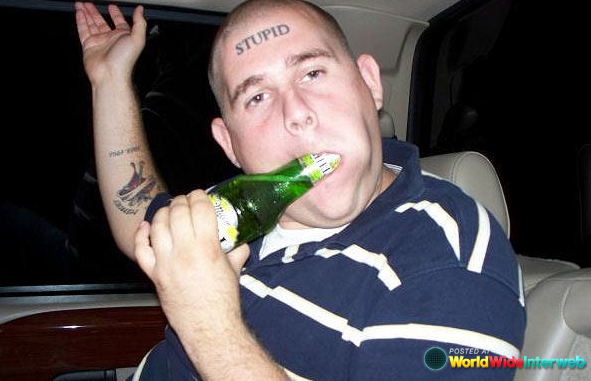
Worse, her sixteen year old sister has already confided she wants a tattoo as soon as the law allows. Horrifyingly, she intends to get a sleeve from shoulder to wrist on one arm. DA FUQ? We presume gone are the aspirations of being any kind of respected professional. And don’t give us the horseshit about changing the world so sleeved-arm tattoo’ed professionals are the norm in the future. We have never met a lawyer, judge, or doctor who has a sleeve tattoo and if we did, we would seriously question their reasoning. Honestly, what can you do to talk sense to these people? They must screw themselves up in order to learn.
This is not the arm of a doctor.
At least it is not a tramp stamp. The main purpose of a tramp stamp is to draw attention to a woman’s ass and trust that men are already noticing her ass without the stamp. Another reason for these stamps are to give someone something to look at when doing it like they do on the discovery channel (love that song). It is called a tramp stamp for a reason. And if this is what we and society figure, this is what the stampee’s future children will figure out. What a nice and subtle lesson for the kids. Of course, if she has not already paid boatloads of money to have it removed so that her children do not wonder whether mommy was a slut but still know she lacked good judgment.
Nothing can be said for such slutty stupidity
For saying the truth, this girl does gets our respect. Not for being an unashamed slut though. There are plenty of those.
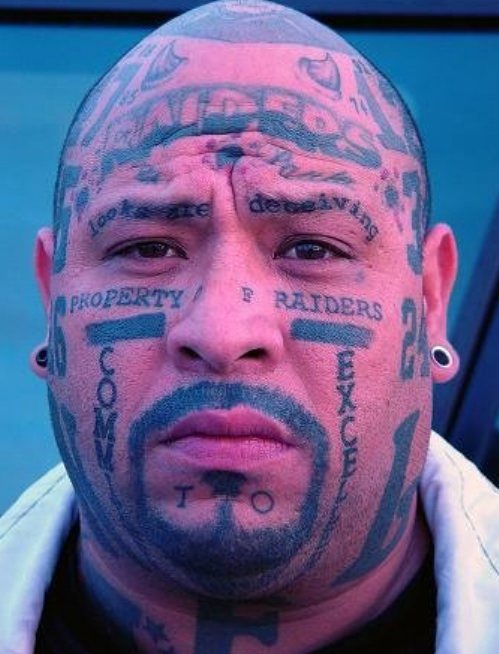
Then there is the face tattoo. Personally, there is nothing worse than a face tattoo. If part of a military unit and everyone was getting one, we would take the risk of pissing everyone off and being put on point perpetually to eventually get killed. However, we do actually have respect for those with face tattoos. Not the dots or tiny stars by eyelids (facial tramp stamps) but the full on repugnant face tattoos. Although hideously ugly, these people clearly don’t give a shit what others think. That courage, even if horrendously misguided onto their face, can be a good thing in life. It could also mean they are a murderous whacko but you don’t need a face tattoo to be one of those.
I dare you to tell this man the truth about the raiders.
So in summation: unless Samoan or similar, part of a dangerous team, or someone who’s judgment is controlled by grief/love, we think your tattoo is probably just a conformist symbol of your inability to think independently. Please stop getting them just so you can get a tattoo like everyone else has done. It is lame!
Suggestions Appreciated. Rules are: Three word alliteration; 10 or 12 syllables; Cannot use a word that is already on the list; First word ends in ‘ly’ and must be 4 syllables or more; Last two words must be a stand-alone direct insult; No one syllable words; second word cannot end in ‘y’. Good luck. And no vulgar curse words. We draw the limit at queef-stain.
 There are too many bad, violent or mentally jacked-up cops roaming around. Worse, expecting the people who hire them to supervise them properly has apparently become too much to ask. So what to do? I have a bold idea.






















 Plans Of Atlas